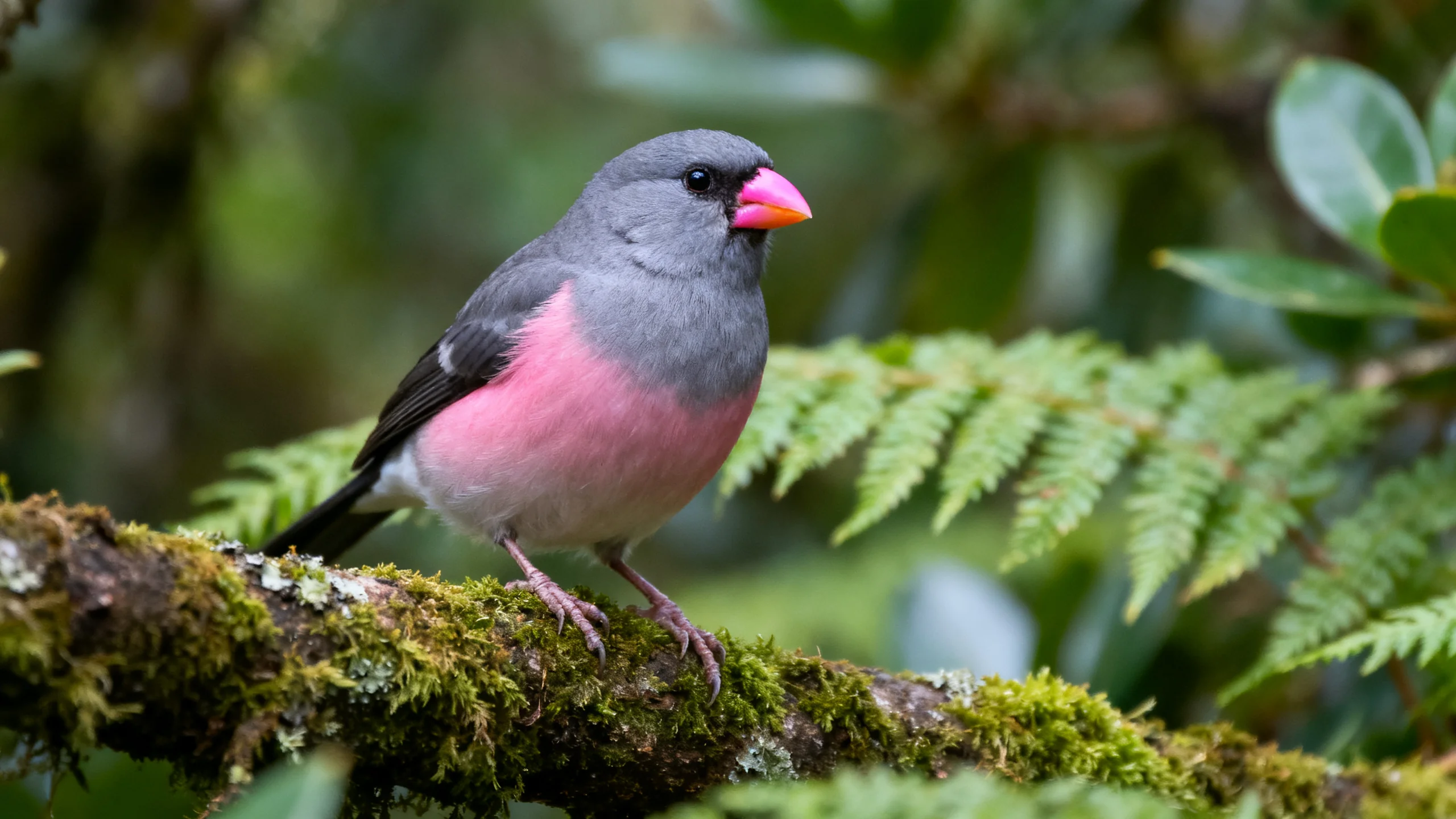
The Azores has 60+ endemic plant species, 8 endemic bird subspecies, and a UNESCO biosphere reserve. The species you can actually see, where to look, and the survival story of the Azores bullfinch.
The Azores has been isolated from continental land for millions of years, and over that time a small set of species evolved their own Azorean varieties. Some are obvious (the Azores bullfinch, the Macaronesian laurel forests). Some are subtle and visible only with patience (the Azores noctule bat, the half-dozen endemic insects). The whole archipelago is a UNESCO biosphere reserve.
This guide covers what is endemic, where to actually see it, the conservation story of the bullfinch, and the introduced species that have changed the ecological balance.
What “endemic” means here
Endemic species exist nowhere else on earth. In the Azores, three categories matter.
Strict endemics. Species found only in the Azores. About 70 plant species, 8 bird subspecies, several bats, marine invertebrates, and insects.
Macaronesian endemics. Species shared with the other Macaronesian islands (Madeira, Canaries, Cape Verde) but not found on continents. The laurel forest belongs here.
Native non-endemics. Species that colonised the Azores naturally (carried by wind, sea, or migration) but exist elsewhere too. Most seabirds, most of the original flora.
The interesting endemics are the strict ones, and the most accessible strict endemics are the bullfinch, the laurel forest, and the endemic plants of the high-altitude blue ledges.
The species you can actually see
Priolo, the Azores bullfinch (Pyrrhula murina)
The flagship endemic. A small finch the size of a starling, with a stout pink beak, grey-pink plumage, and a quiet hooting call. Found only in the laurel forest of eastern São Miguel, mostly around Pico da Vara and the upper Nordeste.
The species nearly went extinct in the 1990s (fewer than 200 breeding pairs) and was saved by an EU-funded recovery programme: clearing invasive vegetation, replanting native laurel, protecting the breeding areas. The population is now around 1,200 pairs.
Where to see them: the Pico da Vara nature reserve has marked trails. The visitor centre at Lomba do Cavaleiro runs guided birdwatching walks. Best months: spring (March to May) when the birds are most vocal and active.
Laurel forest (Laurissilva)
The endemic plant community of Macaronesia. Tall evergreen trees (Laurus azorica, Picconia azorica, Frangula azorica, Ilex azorica, Juniperus brevifolia) with a dense understory of ferns and lichens. Survives best on the cool wet windward slopes between 400 and 800 metres altitude.
Where to see it: the protected reserves on eastern São Miguel (Lombadas, Pico da Vara), the cloud-zone forests above Furnas, and the rim forests of Flores. The Azorean laurel forest is less spectacular than the Madeiran one but more accessible.
Endemic Azorean flora at high altitude
Above the forest line, on the rim plateaus and crater walls, several endemic plants survive in the cool windswept conditions.
- Erica azorica. The Azores heather, a low woody shrub. Pink-purple flowers in autumn.
- Vaccinium cylindraceum. The Azores blueberry, edible, with small dark-blue fruits in late summer.
- Daboecia azorica. The Azores heath, white or pink bell flowers, found only above 600 m.
- Calluna vulgaris. Common heather, not endemic but a key component of the high blue ledges.
Where to see them: the rim trails at Sete Cidades, Lagoa do Fogo, Caldeira do Faial, and the upper slopes of Pico volcano. The ground cover above the laurel zone is almost entirely endemic.
Azores noctule bat (Nyctalus azoreum)
The only mammal endemic to the Azores. A medium-sized fast-flying bat that hunts insects above the forest at dusk. Visible in silhouette over Furnas Lake and the inland calderas in summer evenings, May to September.
Cory’s shearwater and the sea birds
Not strictly endemic but iconic. Calonectris borealis, Cory’s shearwater, breeds in burrows on the cliffs of every island. Adults return at dusk in summer with eerie wailing calls. The Azores hosts the world’s largest breeding population (around 200,000 pairs).
Where to hear them: any coastal village in summer. Vila do Porto (Santa Maria), Vila da Madalena (Pico), Lajes (Pico), the cliffs above Praia do Pópulo (São Miguel). After sunset is the best window.
The introduced species problem
The Azores has been settled since 1432, and human activity has imported numerous plants and animals that displace the natives.
| Invasive species | Origin | Impact |
|---|---|---|
| Hortensia / hydrangea | China | Outcompetes endemic ground cover |
| Conteira (kahili ginger) | Himalaya | Smothers laurel forest understory |
| Pittosporum undulatum | Australia | Displaces native trees |
| Cryptomeria japonica | Japan | Vast monoculture plantations |
| Black rat | Eurasia | Predates seabird burrows |
| Feral cats | Domestic | Threatens ground-nesting birds |
The hydrangea is the icon of the Azores in tourism marketing, but botanically it is an invader. The hortensia hedges that line country roads outcompete the endemic flora that would otherwise grow there. The conservation tension is real: locals love the flowers, ecologists want them removed.
How conservation is organised
The Azores is one of the few EU regions where the entire archipelago is a biosphere reserve. UNESCO designations cover Corvo (the whole island), Flores (the whole island), Graciosa (the whole island), and Santa Maria (the whole island). The parques naturais (Pico, São Jorge, Faial, Terceira, São Miguel) cover the higher-elevation zones on the larger islands.
The recovery programmes for the priolo, the Azores noctule, and the Cory’s shearwater colonies are EU-LIFE funded. The Madeiran storm petrel, also Azorean-breeding, has its own recovery plan.
Frequently asked questions
What is the best month for birdwatching?
April to June for endemic forest birds (priolo) and for transatlantic migrants that stop on the islands. August to October for the seabird spectacle (Cory’s shearwater returns at dusk). November to March is quieter but still productive for resident species, especially raptors.
Are there guided wildlife tours?
Yes. SPEA (Sociedade Portuguesa para o Estudo das Aves) runs half-day priolo walks from the Lomba do Cavaleiro centre. Several private operators run nocturnal shearwater tours from Lajes (Pico) and Vila do Porto (Santa Maria). For botany, Walk and Talk Azores on São Miguel offers naturalist-led flora walks. Around €25 to €60 per person depending on duration.
Will I see the priolo on a normal trip?
Only if you specifically go looking. The priolo is restricted to a small area of eastern São Miguel and is not visible from the main roads or tourist viewpoints. The Trilho do Priolo nature trail at Lombadas is the practical way. Without the trail and without binoculars, the probability is essentially zero.
Are the laurel forests easy to walk in?
The marked PR trails (Pequena Rota) are well-graded and easy. Off-trail walking is genuinely difficult: the understory is dense, slippery, full of obstacles. Stick to the marked paths. The Trilho do Priolo and the Faial da Terra–Sanguinho hike are the two best laurel-forest walks accessible to anyone in decent shape.
What about the cows and the hydrangeas, are they really a problem?
Ecologically, yes. Dairy farming consumes most of the lower agricultural land and the pasture is mostly introduced grass species. Hydrangea hedges occupy land that would otherwise host endemic flora. The Azores has chosen a working balance: dairy and tourism on the lower slopes, biodiversity protection above 500 m. It is a compromise that mostly works for both.