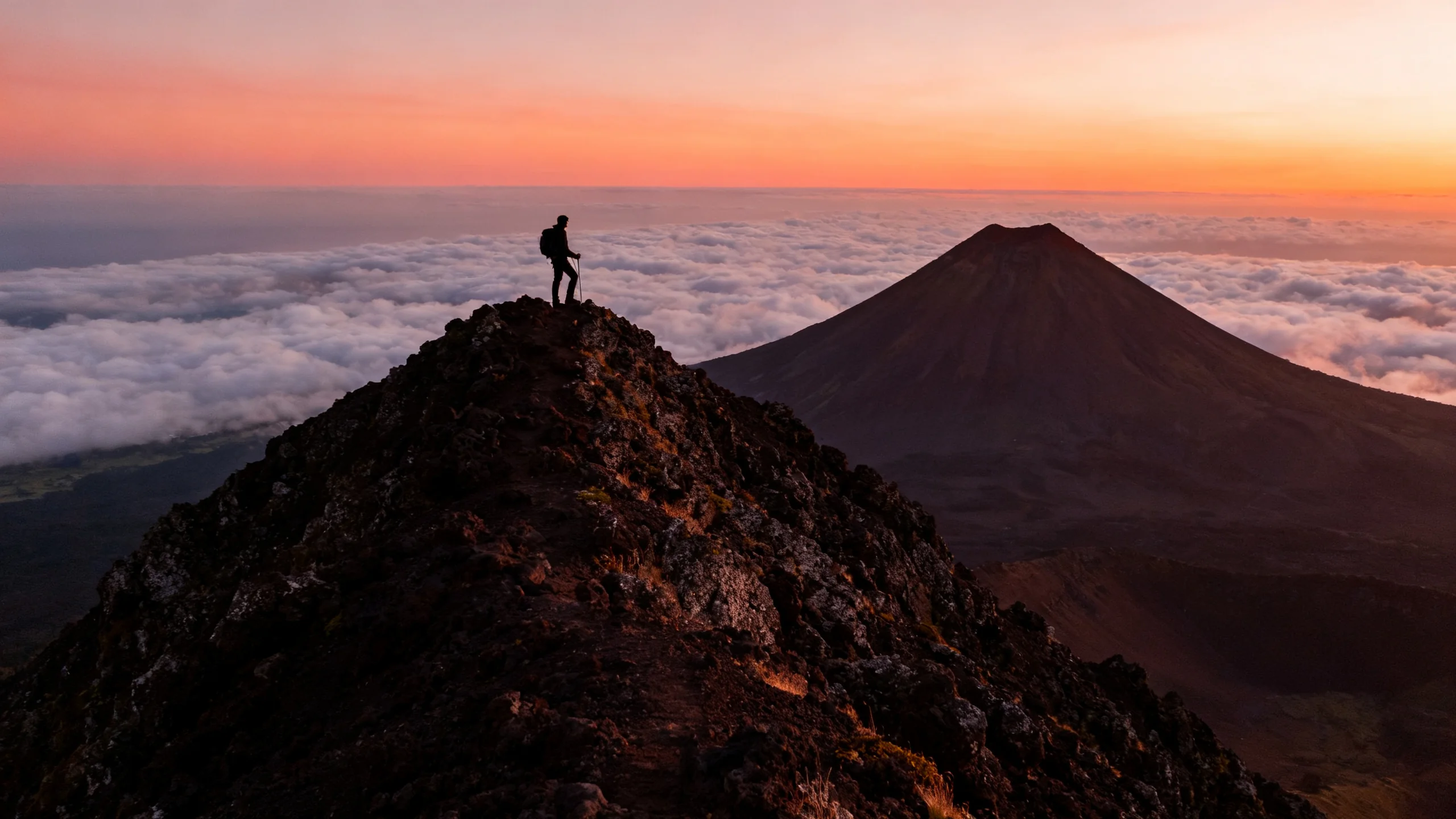
Climbing Pico volcano
Pico volcano is the highest peak in Portugal at 2,351 metres and the tallest mountain to rise directly from the ocean floor anywhere in the Atlantic. The climb is the central experience of any Pico trip. This is what it actually involves.
The route, in numbers
| Item | Detail |
|---|---|
| Start altitude | 1,200 m, Casa da Montanha visitor centre |
| Summit altitude | 2,351 m (Piquinho summit cone) |
| Vertical gain | 1,150 m |
| Distance | 8 to 9 km round trip |
| Time up | 3.5 to 5 hours |
| Time down | 2.5 to 4 hours |
| Total day | 7 to 9 hours portal to portal |
| Difficulty | Strenuous, non-technical |
The mandatory registration
Climbing Pico is regulated by the regional environmental agency. Every climber must register at the Casa da Montanha visitor centre at the trailhead, sign a waiver, and carry a GPS tracker (provided) for the duration of the climb. The rangers monitor the tracker in real time. If you do not return by the agreed time, search teams are dispatched.
Registration costs €15 per person plus €5 tracker rental. Bookable in advance via montanhapico.azores.gov.pt, or in person on the day. The trailhead daily quota is around 320 climbers, and it fills in July and August. Book at least 2 to 4 weeks ahead for peak season; walk-in works the rest of the year.
The guide requirement
A licensed guide is mandatory for all summit attempts. The visitor centre maintains a list of certified guides; you can book one through them or directly via the operators listed on visitazores.com.
Group sizes are typically 1 to 4 climbers per guide. Cost per person: €60 to €90 for the standard daylight ascent, €100 to €150 for the popular sunrise climb (which starts at midnight). Sunset and overnight summit camps are also offered by some operators.
The route description
The trail is well-marked with red-and-white poles all the way to the summit. Three sections.
Lower section (1,200 to 1,800 m, 2 hours). A steady climb on volcanic gravel and scoria, gradient 20% to 30%, occasional rope handrails at the steeper steps. The vegetation thins out as you ascend. The path is wide enough for two climbers abreast.
Middle section (1,800 to 2,200 m, 1.5 hours). Steeper and rockier. The trail narrows, the rope handrails become more frequent, and the air starts to thin perceptibly. Most climbers feel the altitude here. The slope is exposed to wind from the north.
Final section to summit (2,200 to 2,351 m, 30 to 60 minutes). The most technical part. The trail enters the summit crater and reaches a low point at 2,200 m, then climbs the small summit cone (Piquinho) to the actual peak. The final 150 metres of vertical involves scrambling on volcanic rock with some use of hands. Not climbing, but attention required.
Fitness honest-talk
Pico is not a technical mountain but it is sustained. You need:
- Cardiovascular endurance for 4 to 5 hours of continuous uphill walking, sometimes at 2,000+ m altitude where the air starts thinning.
- Good knee health for the descent (the same 1,150 m of vertical, downhill on loose scoria).
- Comfort with scrambling on the final 150 metres of the summit cone (no exposure, just use of hands).
- Mental preparedness for cold and wind at the top, even in August.
If you have hiked European 2,000-metre peaks (Pyrenees, mid-Alps trails), Pico is well within your range. If your recent walking history is city walking and the occasional day hike at low altitude, plan a few weeks of preparation and consider the easier sunrise option (which breaks the climb across cooler hours).
What to bring
- Boots. Real hiking boots with ankle support. Trail runners work for fit, experienced climbers; everyone else needs the ankle.
- Three layers. Base layer (technical t-shirt), insulating mid-layer (fleece), windproof shell. At the summit it is 10 to 15 °C cooler than at the trailhead, before windchill.
- Hat and gloves. Even in August. The summit wind is a constant.
- Headtorch. Required for the sunrise option, useful for the daylight one if you finish late.
- Water, 2 to 3 litres per person. No streams on the route. The visitor centre sells bottled water but at trailhead prices.
- Food. Two to three energy snacks, a sandwich for the summit. The cold blunts your appetite, so pack things you will actually eat.
- Sunscreen and sunglasses. The UV at 2,000+ m is intense even on overcast days.
- Phone with offline maps. Backup to the tracker, useful for photos.
The sunrise option
The most popular variant in summer. Departure from Casa da Montanha at midnight or 1 am, summit at sunrise (around 6 am in July), descent in daylight. The advantages: cooler climbing temperatures, the spectacular sunrise from the crater rim, less competition for the summit cone.
The disadvantages: starting in the dark with headtorches on volcanic gravel is harder than starting in daylight, you do not see the route until you have already climbed half of it, and the operator has to keep a strict schedule. Around €100 to €150 per person with guide, including a small breakfast at the summit.
What about altitude sickness?
Pico is below the altitudes where acute mountain sickness (AMS) typically develops. At 2,351 m you are still comfortably below the 2,500 m threshold where AMS becomes a meaningful risk. You may notice mild shortness of breath and a slightly higher heart rate, but genuine AMS is rare.
If you have a known sensitivity to altitude (you have had symptoms at 2,000 to 3,000 m elsewhere), the climb is still doable but ascend slowly, drink plenty of water, and descend if you feel unwell. Your guide can call a tracker evacuation if needed.
What about doing it without a guide?
Not legally possible. The mandatory guide rule exists because rescue missions on Pico are difficult, expensive, and historically frequent. The rangers turn back climbers who attempt the trail without a registered guide. The occasional unguided summit has been done by experienced mountaineers in defiance of the rule, but the penalty if caught is a €250 fine plus the costs of any rescue.
Best time of year
May to early October. June to August are the peak months with the most stable weather, longer days, and the highest success rate. Late May and early September are quieter with similar conditions. November to April is technically possible but the weather window narrows to a handful of usable days per month.
If the climb is cancelled
Build at least one buffer day into your Pico stay. If your booked day is weathered out, the operator will rebook for the next available window (usually within 1 to 3 days in summer, longer in shoulder months). Refunds are standard if no rebooking is possible.