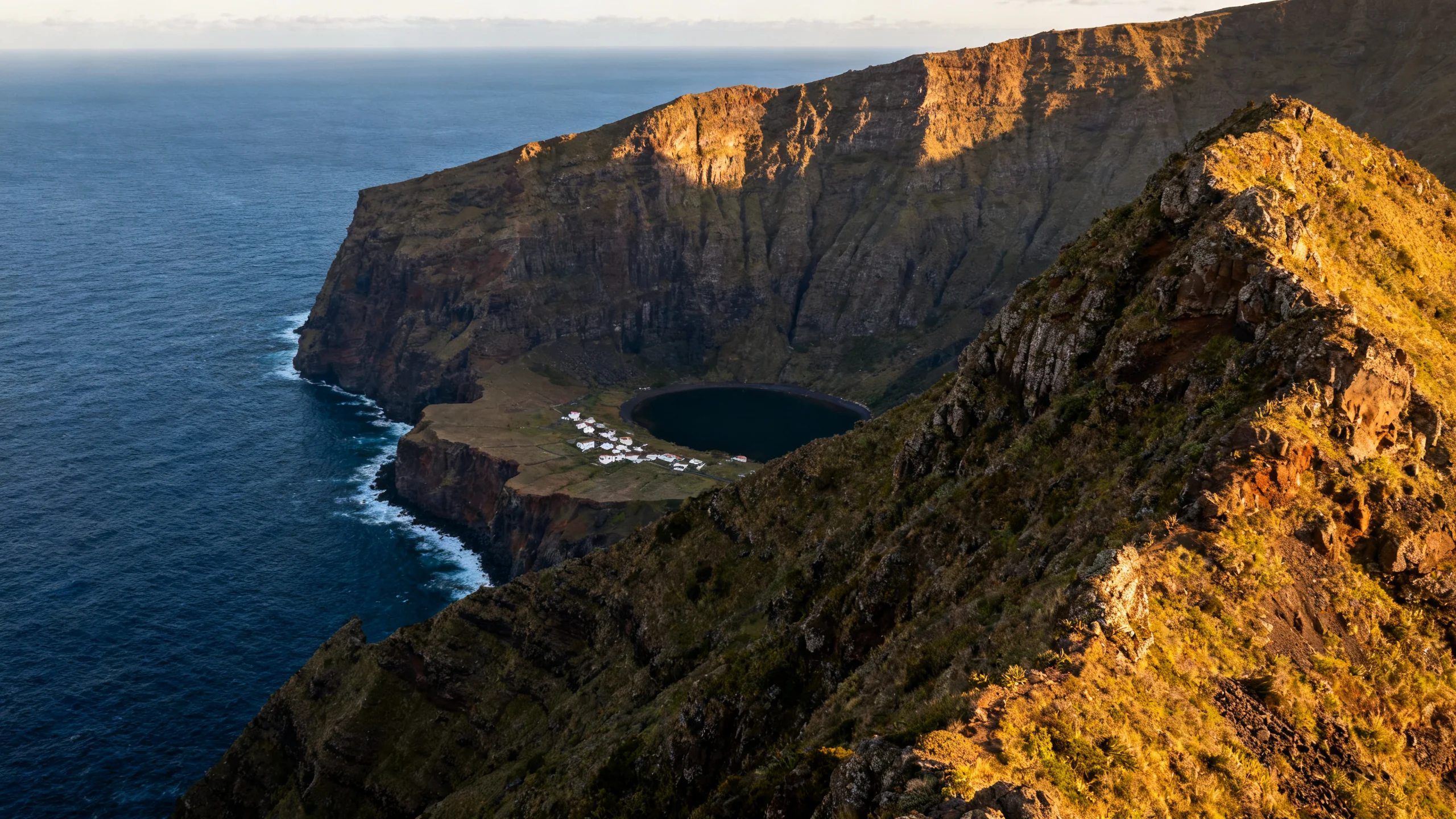
The fajãs of São Jorge
Over 70 fajãs sit at the foot of the São Jorge cliffs. Seven are worth a dedicated descent for the day. This guide tells you which, how to reach each, what to do there, and how to chain two or three into a single day.
What a fajã is, and how they formed
A fajã is a flat coastal platform formed at the foot of a cliff when an ancient landslide tore off a section of the cliff face and deposited the debris at sea level. The resulting platform sits a few metres above the waves, backed by the remaining vertical cliff which can be 400 to 700 metres tall.
On São Jorge the cliffs are taller and longer than anywhere else in the archipelago, so the fajãs are correspondingly more numerous and more dramatic. Some were formed by historical landslides documented in the 18th century; others are much older. A few are still geologically active and continue to grow with each rainfall.
Most are agricultural (vineyards, fruit trees) or inhabited by a few families. Several have public access only by foot, and a handful are accessible by car via switchback roads carved down from the ridge.
The seven worth descending
1. Fajã dos Cubres (north coast)
The most accessible fajã and the right first stop for any visitor. A salt-water lagoon behind a black-pebble beach, a small white-painted village of 8 houses, a single café (Cantinho da Praia) that serves grilled fish for around €15 to €20.
Access: road, switchback descent from the EN3 ridge road, 25 minutes' drive from Velas. Park at the small lot at the village entrance.
Time: 1 to 2 hours. Walk the perimeter of the lagoon, eat at the café, return.
2. Fajã da Caldeira de Santo Cristo (north coast)
The most distinctive fajã. A brackish lagoon with the only wild clam fishery in the archipelago, plus a small reef break that is one of the best surf spots on the central plateau. The few residents live by clamming and surfing.
Access: trail only. The PR 1 SJO trail descends from the ridge at Serra do Topo, 90 minutes down on a steep but well-marked path. The climb back is 120 to 150 minutes. Bring water and food; the fajã has no shop.
Time: 5 to 6 hours total for the round trip including time at the fajã.
3. Fajã do Ouvidor (north coast)
A small fajã with the island's only natural sea pool (Poça do Simão Dias). The pool sits inside a basalt depression on the shore and fills with each high tide. Genuinely swimmable on calm days. A handful of houses, no café.
Access: road, 30 minutes from Velas via Norte Grande.
Time: 2 to 3 hours. Combine with Fajã dos Cubres on the same north-coast day.
4. Fajã das Almas (south coast)
One of the larger inhabited fajãs, with a small village of around 30 houses, two cafés, a chapel, and a small swimming pool cut into the basalt. The atmosphere is genuinely lived-in (people farm here, kids go to school up on the ridge).
Access: road, 35 minutes from Velas.
Time: 2 to 3 hours.
5. Fajã dos Vimes (south coast)
Famous for its coffee. A small plantation produces around 300 kilos per year of arabica coffee (the only commercial European coffee outside the Madeiran microclimate). Tastings at the village café for €4. Also known for the traditional Azorean weaving (vimes means wicker).
Access: road, 40 minutes from Velas.
Time: 90 minutes.
6. Fajã do Belo (north coast east)
A wide flat fajã on the north coast, with a small village and the Casa do Belo viewpoint at the start of the descent. Wider and gentler than the Caldeira de Santo Cristo descent; suits walkers who want the experience without the strenuous climb back.
Access: trail. PR 2 SJO branches off the ridge trail; descent 60 minutes, climb 80 minutes.
Time: 3 to 4 hours total.
7. Fajã do Topo (eastern tip)
The easternmost fajã, with a working lighthouse and the small village of Topo just inland on the cliff above. Less visited than the central north-coast cluster. The lighthouse view extends to the islet of Topo just offshore.
Access: road, 50 minutes from Velas via the EN3.
Time: 2 hours.
Practical tips for fajã descents
- Footwear. Real hiking boots with ankle support for the trail-only fajãs. Trail runners work in dry weather.
- Water and snacks. Most fajãs have one café at best, none have shops. Carry 2 litres of water per person plus food.
- Weather. The trails are slippery in rain. Check the forecast for the EN3 ridge, not just for Velas; the cliffs have their own microclimate.
- Sun. The fajãs are exposed and the maritime UV is intense in summer. Hat, sunscreen, long sleeves at midday.
- Time budget. Allow 1.5 to 2 times the descent time for the climb back. Trail-only fajãs are full half-days; road-access fajãs are 1 to 3 hours.
Combining fajãs
- North-coast triple road day: Ouvidor + Cubres + viewpoint over Caldeira de Santo Cristo. 5 to 6 hours total.
- South-coast double: Almas + Vimes. 4 hours total.
- Hiker's full day: descend to Caldeira de Santo Cristo, lunch on the fajã, climb back. 6 to 7 hours, the most physically demanding option.
- Eastern point day: Topo + the lighthouse + the eastern fajãs. 4 to 5 hours.