Descending waterfalls, sliding down chutes, and jumping into plunge pools at Ribeira dos Caldeirões. Three operators, fitness honest-talk, and what to bring.
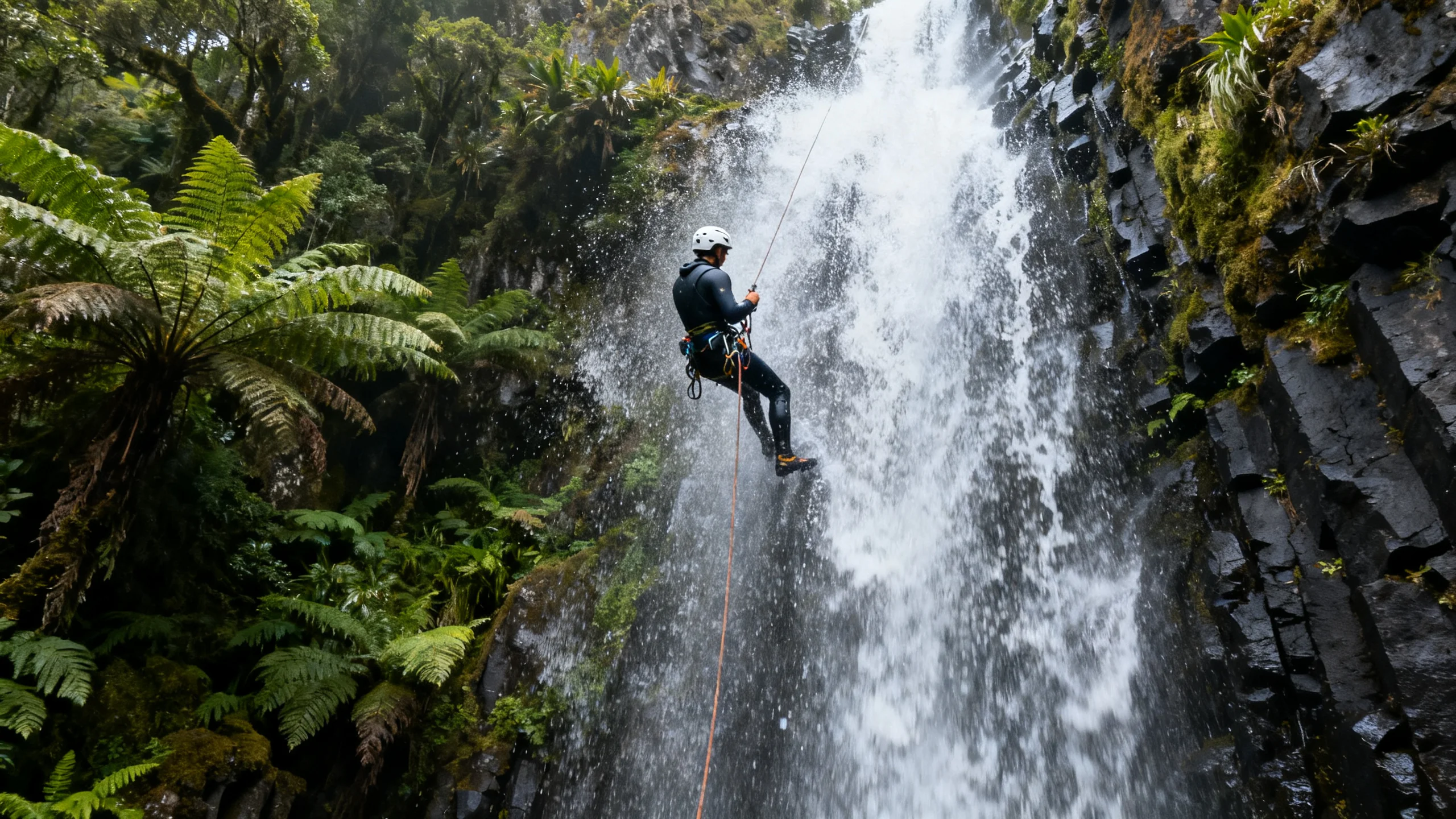
São Miguel is laced with rivers that fall off the central plateau to the Atlantic in a series of waterfalls. Canyoning means putting on a wetsuit and going down them, by some combination of abseiling, sliding on your bottom, and jumping into the pool below. It is the most distinctly Azorean adventure sport, and on São Miguel it almost always happens in one canyon: Ribeira dos Caldeirões, on the north-east coast above Achada.
This guide covers what the day looks like, how the three main operators compare, and how fit you actually need to be.
What canyoning is, in plain terms
Imagine you walk up a forested path along a river, then drop into the river bed. From there you move downstream entirely inside the gorge: walking through shallow water, swimming across deeper pools, sliding down water-smoothed chutes, abseiling off two or three waterfalls, and jumping from rock platforms into plunge pools.
A standard São Miguel canyoning descent at Ribeira dos Caldeirões includes:
- 2 to 4 abseils, the tallest around 15–20 metres
- 2 to 4 natural water slides, 2–4 metres each
- 3 to 5 jumps, the tallest optional and around 6–8 metres
- Several swim-throughs, including one or two narrow gorges where you cannot get out of the river
You wear a 5mm wetsuit, helmet, harness, and neoprene shoes provided by the operator. The water is 14–18 °C even in summer (it is mountain water) so the wetsuit is not theatre.
The fitness question, honestly
The operator briefings say “no experience required, just basic fitness”. This is true but not the whole truth.
You need to:
- be a reasonable swimmer (not Olympic, but able to swim 25 metres without panic)
- be willing to abseil down a wet rock face with a guide controlling the rope from above (no real skill, just trust)
- be willing to slide and jump (the optional jumps you can skip; the slides and small jumps you cannot, the canyon does not have bypass paths)
- have decent knees (the approach hike is short but rocky)
- be 12+ years old and physically able to support yourself in moving water
You do not need to:
- have ever canyoned before
- be especially strong (the gear does the work on abseils)
- be confident in heights (the abseils are intimidating but the rope carries everything)
If any of the need to list is a hard no, particularly the “willing to jump” part, pick a different activity. The canyon does not refund mid-descent.
The three main operators
All three operate in the same canyon and use the same kit. The differences are pace, group size, and price.
The classic Caldeirões descent
The Ribeira dos Caldeirões canyoning experience is the most popular booking (4.9 with 761 reviews). 2.5 hours in the canyon, 4–8 person groups, two guides. Suitable for first-timers. Around €70.
The waterpark version
The WaterPark canyoning at Ribeira dos Caldeirões runs the same canyon but lingers longer at each obstacle: more time on the slides, more retries on the jumps. 3-hour version, around €75. Best if you have done canyoning before and want a fuller day.
The compact descent
The shorter Ribeira dos Caldeirões canyoning trip covers the upper half of the canyon in 2 hours flat, with fewer abseils and lower jumps. Around €65. Best for travellers nervous about the higher commitment, or anyone with a tight half-day window.
Pick the classic option (349641) if you are unsure. It is the right default, and the operator has the most experience.
What the day looks like
The departure point is the operator’s base in Lagoa or Ponta Delgada, about 75 minutes’ drive from the canyon. The standard schedule:
| Time | What happens |
|---|---|
| 9:00 | Meet at the operator’s office. Sign waiver. Pick up wetsuit and gear. |
| 10:30 | Arrive at Ribeira dos Caldeirões park. Gear up. |
| 11:00 | Approach hike to the canyon entry (15 to 20 minutes). |
| 11:15 | First abseil. The descent begins. |
| 13:30 | Exit at the lower waterfall. Hot drink and snacks at the parking. |
| 14:30 | Return to Ponta Delgada. |
Total: 5 to 6 hours door to door for a 2.5-hour canyon time.
Bring: a swimsuit to wear under the wetsuit, a full change of clothes including underwear (you will be wet to the skin), a towel, a snack, and €5–10 cash for the post-canyon coffee. The operator provides everything else.
What you cannot photograph
Phones and cameras do not survive the canyon. The operator’s safety brief includes a firm “leave your phone in the van”. Two of the three operators offer a GoPro service: the lead guide carries a head-cam and emails you the footage afterwards, often included in the price.
If you want pictures, look for that line in the booking listing (“photos included”, “videos included”) and confirm at booking. It is the only way you will get any.
Frequently asked questions
What is the minimum age?
Most operators set the minimum at 12, with parent or guardian present until 16. Anyone under 14 should be a competent swimmer. There is no maximum age but the abseils and jumps demand basic physical mobility. If you are unsure, ask the operator before booking. They will be honest about whether the route suits you.
Can I skip the jumps?
The biggest jumps (6 to 8 metres) are always optional and the guide will rig an abseil bypass. The smaller jumps (2 to 3 metres) can usually be skipped with a slide alternative, but not always. There are one or two short drops where the canyon walls leave no other option. Ask the lead guide which jumps are mandatory before you start.
Is it cold?
Yes, especially in May–June and October. The 5mm wetsuit, neoprene hood and shoes manage the cold once you are moving, but the first plunge feels brutal. Once your body warms the layer of water inside the suit, it is comfortable. Drink something hot at the end and change immediately into dry clothes.
What is the best month?
July to early September. The water is warmest (still 17 to 18 °C), the weather is stablest, cancellations are rare. May, June and October are fine but expect colder water and one cancelled trip per ten. November to April is off-season. Operators run by request only, and many shut entirely.
Can I combine canyoning with another activity the same day?
It is doable but tiring. Most people canyon in the morning and rest in the afternoon, or canyon in the afternoon and dine somewhere quiet in the evening. If you want a second activity, the soft option is a sunset thermal bath at Poça da Dona Beija (the canyon ends mid-afternoon, you can be in Furnas by 5pm). Avoid stacking two strenuous activities the same day, your legs will tell you why the next morning.