Sperm whales year-round, blue and fin whales in spring, dolphins all year. When to go, where to depart from, and which tour to book.
The Azores log more cetacean species than almost anywhere else on Earth. Twenty-four species have been sighted in the archipelago’s waters, including the resident sperm whales (year-round), the seasonal blues and fins that pass through in spring, and four species of dolphin that travel the same deep-water corridors as the whales. Whale watching here is not a stretch. It is the single most concentrated marine-mammal experience available to the casual European traveller, and the operators who run the trips are serious about it.
This guide covers what you will actually see, when to go, where to leave from, what the tour day looks like, and the four trips worth booking.
What you can see
Three categories matter.
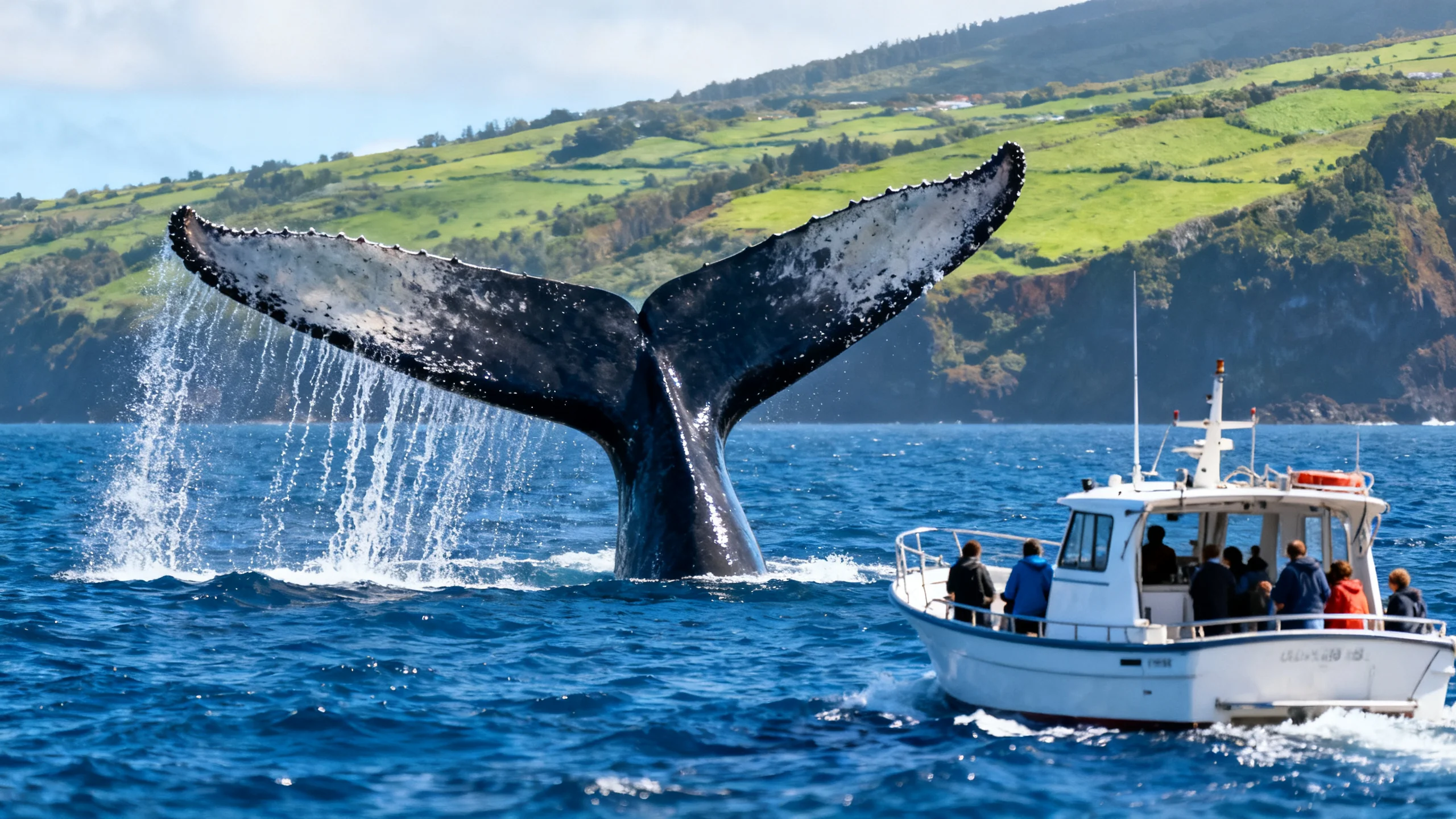
Resident sperm whales. The Azores host a large, year-round sperm whale population. The same matriarchal families have been mapped in these waters since the 1980s. Sperm whales surface for 8–12 minutes between deep dives, which makes them the most reliable sighting any month of the year. They are the species whaling logs reference for the historic Azorean whaling industry out of Lajes do Pico (closed in 1984).
Seasonal baleen whales: blue, fin, sei. Late March to early June, the North Atlantic migration brings blue whales, fin whales, and sei whales through Azorean waters on their way north. A clear day in May with calm sea is the single highest-probability window for blue whale sightings anywhere in Europe. The migration window is short. By July they are gone.
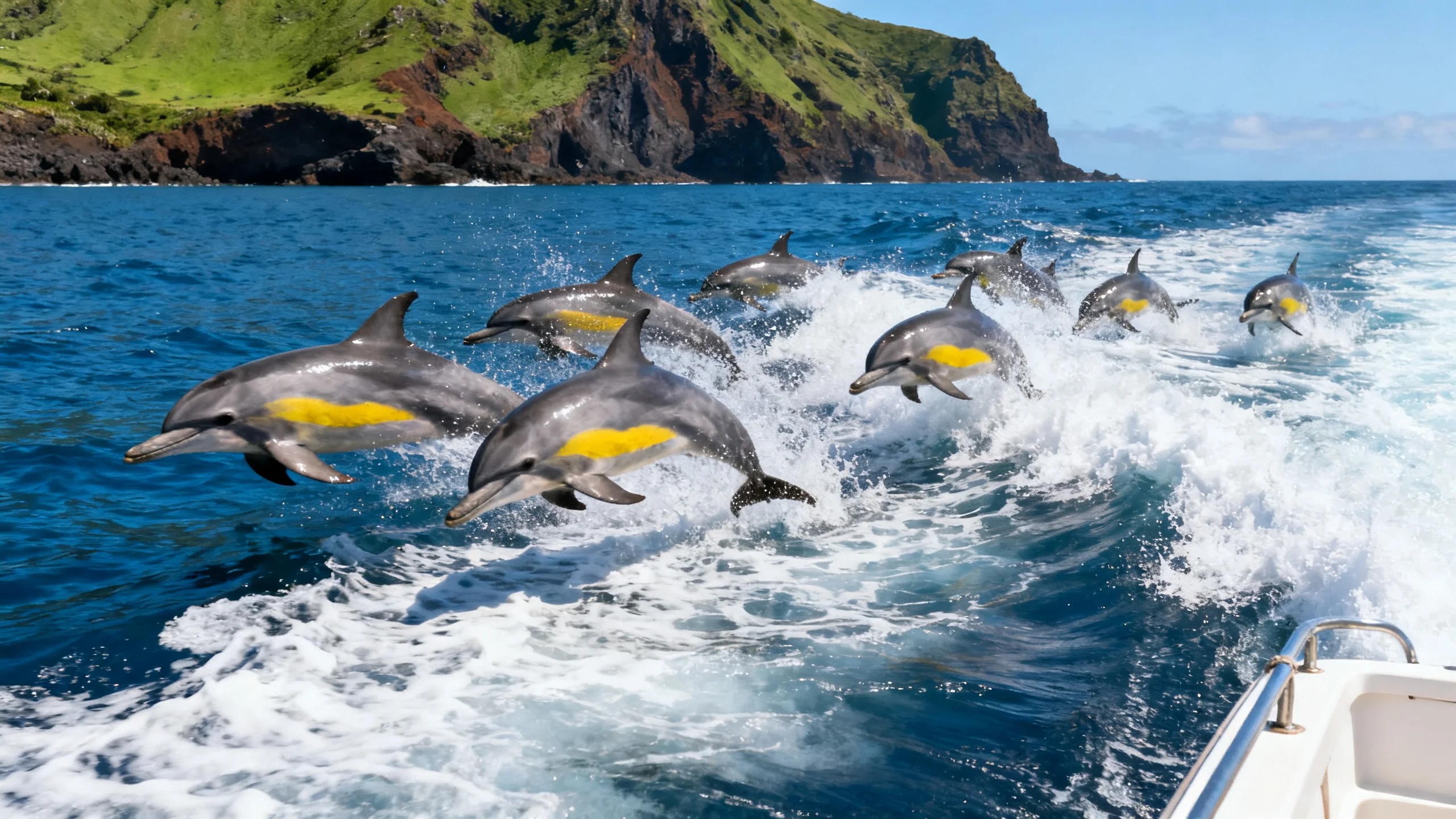
Dolphins, year-round. Common dolphins, bottlenose dolphins, Atlantic spotted dolphins, and Risso’s dolphins frequent the same waters. Dolphin encounters happen on most tours regardless of season. Pods of 50–200 are not uncommon in summer, and they will play with the boat.
Beyond the headliners, occasional rarities show up: orcas (rare but documented), pilot whales, beaked whales, false killer whales. The local spotter network logs sightings daily and the boats coordinate.
When to go
The best months are May, June, September, in that order. These give you the seasonal baleen whales (May–June) plus the warmest, calmest sea (September). July and August work too but the boats are busiest and the sea is choppy on afternoons. October to March: sperm whales and dolphins still present, fewer tourists, but more cancellations from weather.
| Month | What you see | Sea conditions | Tourist load |
|---|---|---|---|
| Apr | Sperm + early blues | Variable | Light |
| May–Jun | Peak blues + sperm + dolphins | Mostly calm | Building |
| Jul–Aug | Sperm + dolphins | Calm AM, choppy PM | Heavy |
| Sep | Sperm + dolphins + occasional fin | Calm | Moderate |
| Oct–Dec | Sperm + dolphins | Increasing wind | Light |
| Jan–Mar | Sperm + dolphins | Frequent cancellations | Sparse |
Where to depart from
Three departure ports cover most of the Atlantic-facing Azorean waters.
Ponta Delgada (São Miguel) is the standard choice. The largest fleet, the most departures per day (4–6 in summer), the most operators competing on quality. Boats run from the marina, 10 minutes from central PDL by foot. If you have a single day on São Miguel for whale watching, this is where you go.
Vila Franca do Campo (São Miguel) is the alternative southern-coast port, 25 minutes east of PDL. Smaller scale, fewer boats per day, slightly shorter run to the deep water. Some operators favour this port because the spotter network on the south coast has different sightings angles. For solo travellers and small groups, Vila Franca often feels less rushed.
Lajes do Pico (Pico Island) is the historic whaling port and the specialist’s choice. The waters off Pico are the deepest accessible from shore in the Azores, which means the boats reach sperm whale territory in 20 minutes instead of an hour. The downside is logistics: you need to be already on Pico (inter-island flight or ferry from Faial). For travellers on a multi-island trip, the Pico whale watch is the highest-quality option in the archipelago.
What a tour looks like
A standard whale-watching trip runs 2.5–3.5 hours. You check in 30 minutes before departure at the marina office, get a short briefing (safety, species, what to watch for), board a RIB (rigid inflatable, 12–16 passengers) or a slightly larger catamaran (24–40 passengers), and head out. The boat captain coordinates with the vigia by radio. Average time to first sighting on a typical day: 40–60 minutes from the harbour.
You see the whales from the boat. There is no swimming with whales. That is a different, more specialist tour, and ethically more contested. The boat keeps a regulated distance (50 metres minimum). Photography is allowed and encouraged.
The marine biologist on board (on the higher-quality operators) narrates species behaviour, identifies individuals from fluke markings, and answers questions. On the lower-end tours, the captain handles the commentary, still informative but with less depth.
Four tours worth booking
The Azorean whale-watching scene has four standout operators, each suited to a different traveller profile. Below, ranked by best fit for the typical visitor, not by who pays the highest commission.
1. Most-booked all-rounder
The whale and dolphin watching trip from Ponta Delgada is the busiest whale-watching tour on the island. Over four thousand reviews, a 4.7 rating that has held steady for years, a reliable operator with multiple daily departures and the standard PDL marina pickup. This is the default pick if you want one trip, want it to work, and do not have a strong preference on style. Around €70.
2. Smaller-group with biologist
The whale watching and islet boat tour with marine biologist is the upgrade for travellers who want commentary and a less crowded boat. Smaller group, marine biologist on board narrating individual whale behaviour, slightly longer time on the water. Includes a short stop at the Vila Franca do Campo islet on the way back. Around €62, and actually cheaper than the headline option above, which is unusual for a smaller- boat tour.
3. Standard cruise with biologist
The São Miguel whale-watching cruise with marine biologist is the catamaran alternative: a larger boat (more stable, less spray, more comfortable for travellers prone to motion sickness), still with a marine biologist. Suits older travellers, families with small children, anyone who specifically does not want a RIB. Around €65.
4. From Pico, for the specialist
The Pico Island whale watching experience from Lajes do Pico is the historic whaling port option. Highest rating in the archipelago (4.8), smaller operation, faster access to deep water. Choose this if you are already on Pico for an island-hopping trip, or if you are specifically a marine wildlife enthusiast willing to add a day on Pico for the upgrade. Around €70.
What to bring
- Sun protection. The Atlantic reflects strongly. A hat that ties or clips, sunglasses, SPF50 even in shoulder season.
- Windproof outer layer. The wind on the water is consistently 5–10 °C cooler than on land. A lightweight shell works in summer, a heavier jacket in winter.
- Closed shoes. Boats are wet. Sandals slide; flip-flops are a hazard.
- Camera with telephoto. A phone works for the boat-level wide shots but the whales are 50+ metres away. A 200mm lens or a smartphone with optical zoom (e.g. Pixel telephoto, iPhone 5x) catches the fluke shots.
- Motion sickness tablet if you are sensitive (see the warning callout above).
Frequently asked questions
Are sightings guaranteed?
Most operators offer a sighting guarantee: if no whales or dolphins are spotted on your trip, you get a free re-booking on a subsequent day (or a full refund, in some cases). The actual sighting rate is 90–95% in season; the guarantee is rarely needed.
Will I see a blue whale?
Possibly, in late April through early June. A blue whale sighting is the single most rewarding marine mammal encounter available in Europe, and the Azores are statistically the best place to find one. That said, even in peak season, only about 30–40% of trips see a blue. Plan two trips on different days if blues are the goal.
Can children come?
Most operators set a minimum age of 6 for RIB tours and 4 for catamaran tours. Under-3s are generally not accepted (life jacket fit issues). For young families, the catamaran is the right choice: smoother ride, toilet on board, easier to keep a small child entertained for 3 hours.
What if my tour is cancelled for weather?
All operators offer free rebooking. If you have to leave the island before the next available departure, you get a full refund. Plan whale watching for the first half of your trip so the rebooking option is real.