One of the few places you can legally swim with wild dolphins. The licence rules, fitness honest-talk, and three vetted operators on São Miguel and Terceira.
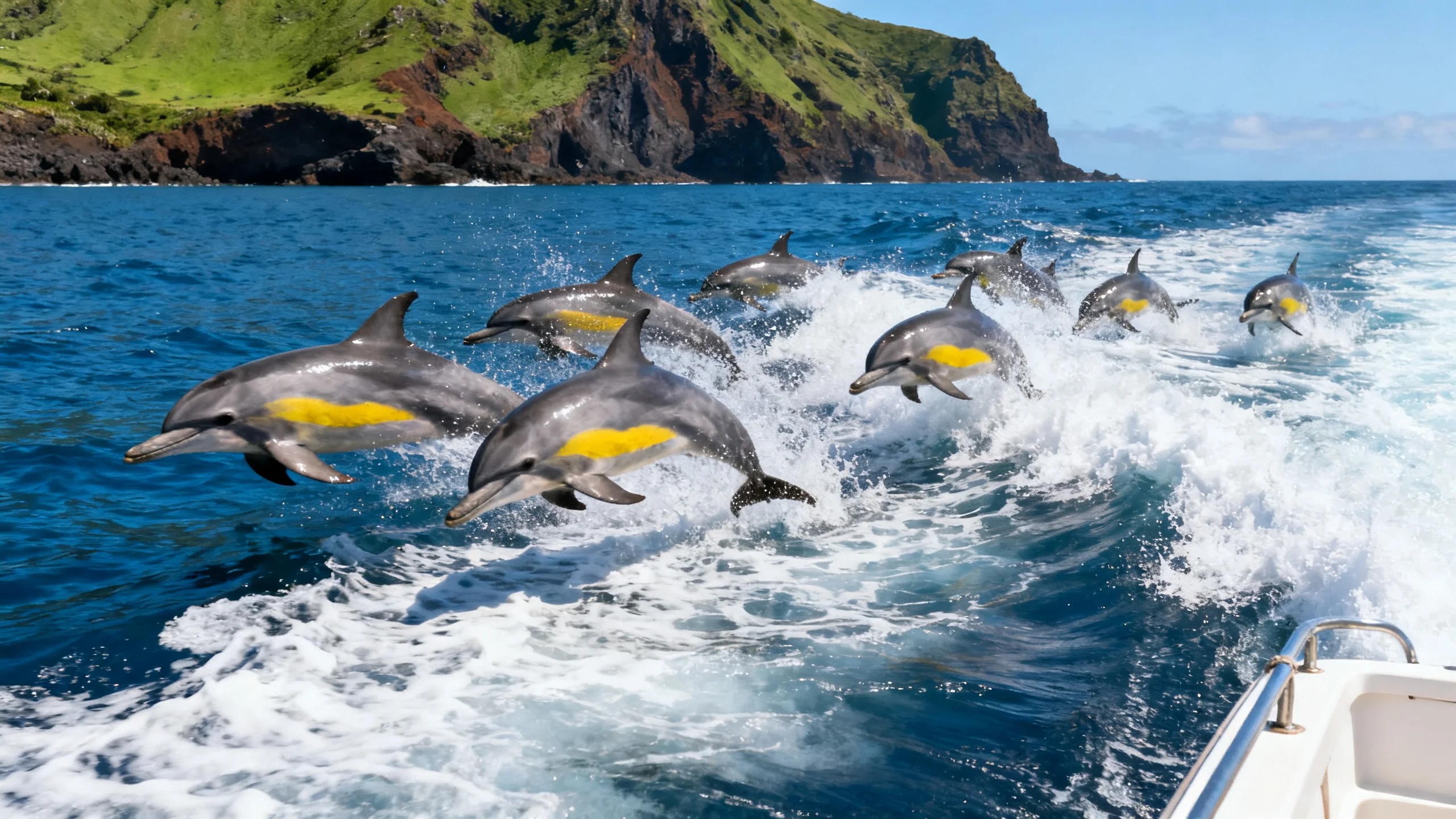
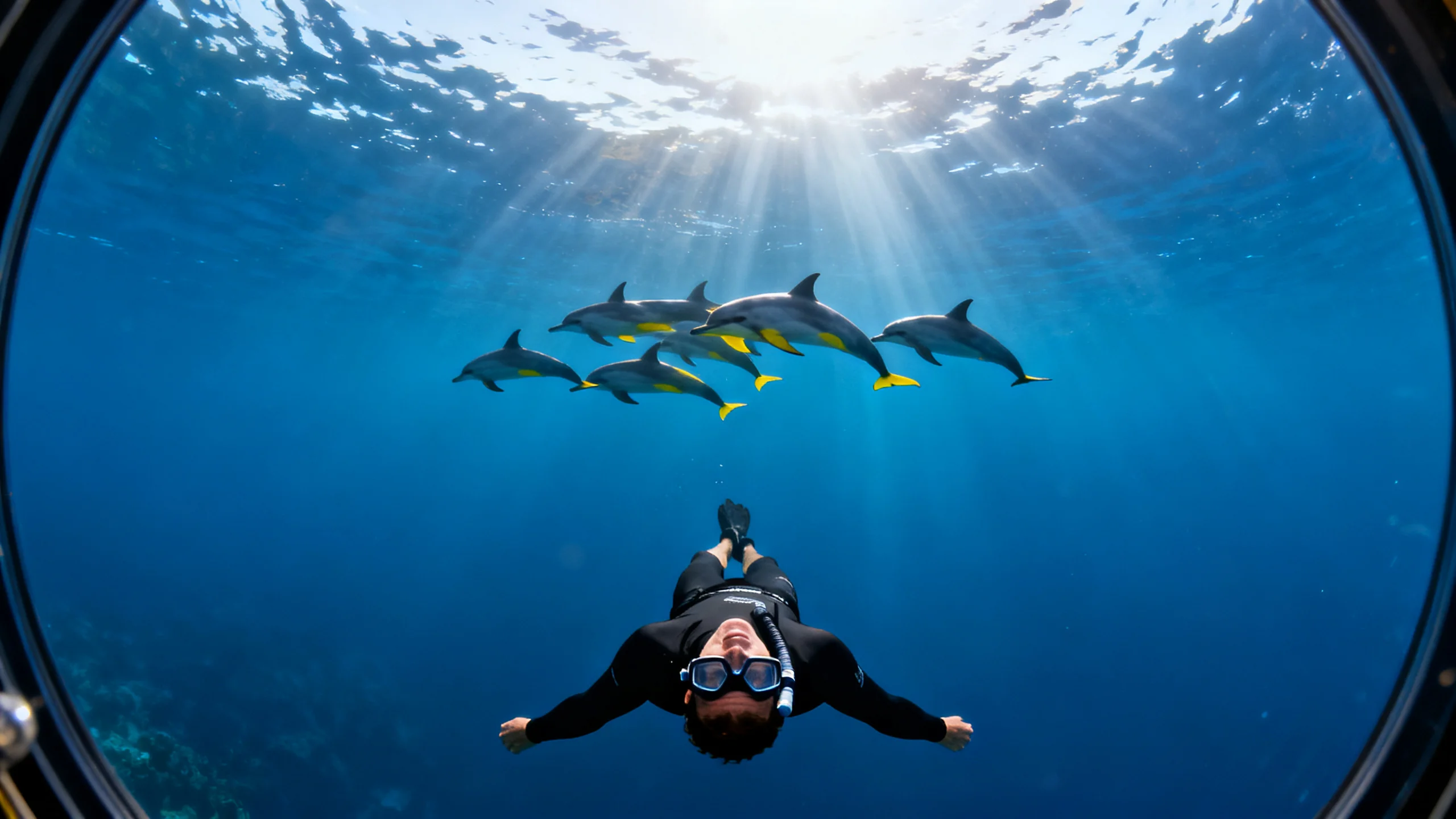
The Azores is one of the few places on earth where you can legally swim with wild dolphins in the open ocean. It is not a pool, not a penned-off lagoon, and not a fed-population encounter. You drop into 3,000 metres of Atlantic water, the dolphins choose whether to approach, and the encounter lasts whatever it lasts. When it works it is unforgettable. When it does not work you have spent €150 for a boat ride and a swim.
This guide explains who the activity is for, the regional licence rules that shape what actually happens in the water, and which operators in São Miguel and Terceira are worth booking.
What the licence actually allows
The Azorean government issues a small number of in-water encounter licences each year. The rules apply to all operators.
- Maximum group: 5 swimmers per skipper, plus one guide in the water.
- Encounter time: one species in one swim. If you change species (e.g. switch from common to bottlenose) it counts as a new swim.
- Approach: the boat positions ahead of the pod, swimmers drop in quietly, no chasing, no touching, no feeding.
- Species restrictions: striped dolphins and Risso’s dolphins are generally off-limits (too shy or too aggressive). Common, bottlenose and Atlantic spotted dolphins are the species you actually swim with.
- Mothers with calves are protected. The guide aborts the swim if a newborn is in the pod.
These rules sound restrictive, but they are why the activity still works at all. Two hundred metres away there is no other boat. The pod is not habituated to humans. The encounter is a genuine wild encounter, not a transactional one.
Who this is for
Swimming with dolphins demands more from you than a standard watching trip. The boat ride is the same, but you have to perform in the water.
You need to:
- be a competent open-water swimmer (50 metres without panic in choppy sea, with mask and fins on)
- be comfortable jumping off a moving boat into deep blue water
- be able to free-dive 2 to 3 metres on a held breath, briefly (the dolphins respond to swimmers who match their depth)
- be 8 years old at the absolute minimum, 12 or 14 with most operators
You do not need to:
- have any scuba certification (this is snorkelling, not diving)
- be a strong free-diver (the brief duck-down is enough)
- own gear (everything is provided)
If you cannot tick the swimmer box honestly, book the whale and dolphin watching trip instead. You will see the same animals from the boat without the panic risk.
The day, in detail
A typical swim-with-dolphins outing in São Miguel runs four hours door to door.
| Time | What happens |
|---|---|
| 9:00 | Check in at the operator’s marina office, briefing, sign waiver. |
| 9:30 | Wetsuit fitting (5 mm full suit), mask and fins issued. |
| 9:45 | Board the Zodiac. 20 to 40 minutes offshore depending on pod radio. |
| 10:30 | First sighting. Skipper positions the boat. Group splits into two. |
| 10:45 | Drop-in 1. Three to five minutes in the water with the pod. |
| 11:15 | Drop-in 2 with the second sub-group, or with a different pod. |
| 12:30 | Two or three more drop-ins as conditions allow. Return to harbour. |
| 13:00 | Back at the marina, hot drinks, debrief. |
Two to four drop-ins per trip is normal. Each one lasts from 60 seconds to 5 minutes depending on whether the dolphins decide to linger. The total time in the water with dolphins, across the whole day, is rarely more than 15 minutes. It is enough.
The three operators worth your money
All licensed operators must follow the same rules. The differences are equipment, group size, guide experience, and price.
The flagship São Miguel option
The swim with wild dolphins in the open ocean trip runs from Ponta Delgada. Around €150 for 3.5 hours, 4.8 rating with 370 reviews. Five swimmers maximum, one in-water guide, full 5 mm suit included. The operator has the longest track record on São Miguel and the highest success rate (95%+ on at least one drop-in). This is the right default.
The Terceira alternative
The swim with wild dolphins in Terceira’s natural habitat trip runs from Angra do Heroísmo. Around €125, 4.8 rating. Smaller crowd at the marina, often calmer sea on the south-Terceira side. Best if you are island-hopping and prefer to avoid the São Miguel queue.
The full-day combined trip
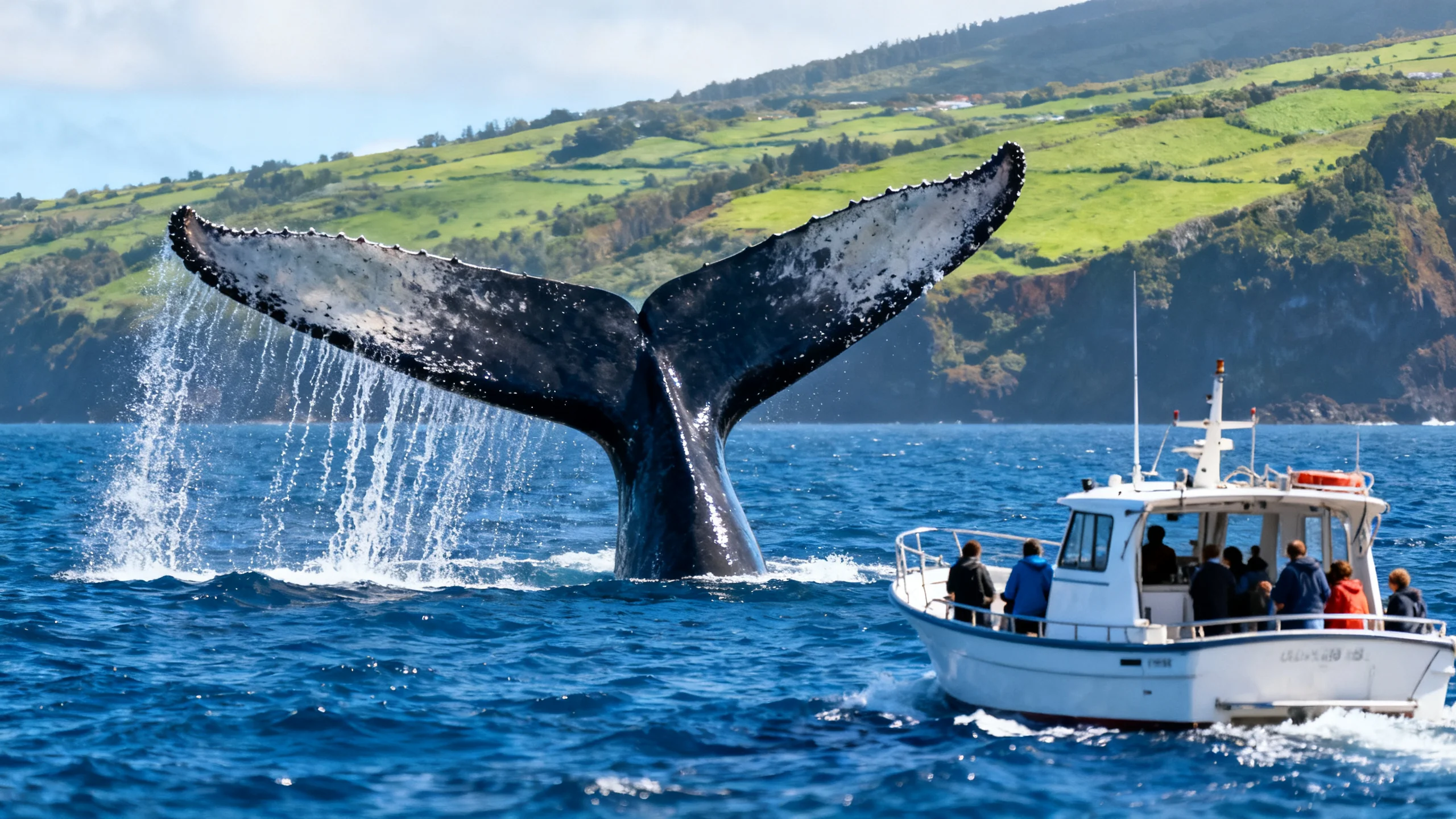
The whale watching and wild dolphins swimming full-day combines the morning watching trip and the afternoon swim into a single 6-hour outing. Around €210. New product, only 6 reviews so far but rated 4.9. Best if you want both experiences and have one slot in your itinerary.
Frequently asked questions
Will I definitely get in the water?
Probably yes, but not always. Operators report 90 to 95% trip success rates for at least one drop-in. Sea state, pod behaviour, and species mix all matter. If conditions do not allow a safe drop-in, the operator aborts. You get a partial refund or a free rebooking. Build a buffer day into your itinerary if the activity matters.
Can I take a GoPro?
Yes, on a wrist strap or chest mount. No selfie sticks (the rule forbids anything that extends towards the dolphins). The water at the drop-in spots is clean and clear in summer, so a GoPro Hero or similar gets usable footage. Most operators also film the day with their own camera and email the highlights afterwards.
Will the dolphins approach me?
Sometimes very close, sometimes 10 metres away, sometimes not at all. Common dolphins are the curious ones. Bottlenose dolphins are slower to approach but stay around longer when they do. Atlantic spotted dolphins are the most playful. The guide reads the pod and positions the swimmers, but the dolphins decide. Free-divers who duck under the surface and swim quietly tend to get closer encounters.
Is it ethical?
The Azorean licence system is one of the strictest in the world. Research from the University of the Azores (2018, 2021) tracked several resident pods and found no measurable behavioural change in the bays where in-water encounters are licensed, compared to control sites. That is not zero impact, but it is much closer to zero than any captive-dolphin operation, anywhere. If ethics is the question, the answer is: not perfect, but defensible.
What if I get scared in the water?
The guide stays within arm’s reach the entire swim. You can signal to return to the boat at any time and a swim-up ladder is in the water within 30 seconds. Nobody is shamed for getting back on. If you suspect this might be you, mention it at the briefing. The guide will pair you closer and brief the skipper to keep the boat in sight the whole time.